

Elizabeth Batty: Genomic surveillance in Southeast Asia
Elizabeth Batty research focuses on genomic surveillance of pathogens in Southeast Asia to identify causes of febrile illness, monitor antimicrobial resistance, and guide appropriate treatments. Using metagenomics to analyse patient blood samples, she aim to develop better diagnostics for rural settings, enabling faster, targeted treatment and improved patient outcomes.
I'm Dr Elizabeth Batty. I'm the Head of Molecular Microbiology at the MORU Tropical Research Network, and I work on genomic surveillance of pathogens in Southeast Asia.
All infectious organisms have molecular genetic material, which is DNA or RNA, and we can look now at the whole sequence of those genetic material of the organisms, and that helps inform our research and frame what research questions we have. So, we can look at the genetic material from a bacterium and we can tell you things like where do we think these bacteria came from? Maybe did a person transmit it to you, or did it come from a different country? We can look at whether those organisms are resistant to different drugs that we want to use. So, if they have genes that give them resistance to different antimicrobial agents, it means we can give the right antimicrobial drugs to people, and it means we can track the spread and the movement of pathogens across the world by looking at their genetic material.
One recent research project we had was to look at people in rural areas of Southeast Asia who got febrile illness, so they had fever, and we looked at many people who came in to a clinic or a hospital and they had a fever and we didn't know what was causing it. And as part of our research project, we collected small samples of blood from many people who had feverish illnesses and we tried to figure out what is causing those illnesses, and one way we looked at that was to use a technique called metagenomics. So, we can look at all the genetic material in an organism, and using metagenomics we can actually look at the genetic material of any organism that is in your blood, and so we can look into these people's bloodstreams. We can look at what genetic material we find and then we can try and pinpoint the organism that is giving them this feverish illness. So, if we don't know what disease people have, it makes it very hard to treat.
One of our key goals is making sure that the right treatments get to the right patients, and that we are using the drugs we have appropriately. If we use them inappropriately, we might get more resistance to those drugs. And we know that in a lot of areas around the world, there is inappropriate use of antibiotic and antiviral medication. By being able to track what illness a person has, we can more appropriately target the treatment at them, so they get the treatment that actually treats the disease they have and that will help them to become healthy sooner. It also allows us to work on better diagnostic tools, so that in rural areas where it is hard to figure out what diseases are causing people's illnesses, it allows us to develop better tools that can be used out in rural areas, in places where people can't get to hospitals and clinics quickly, so that we can figure out what diseases they have and what is the appropriate treatment to give them.
I think our line of research can make a great deal of improvement in the lives of patients across Southeast Asia. I think we've seen the utility of genomic surveillance when it was used during the pandemic to track the spread of COVID-19, to track the different variants and to track the transmission of the disease around the world. Using genomic surveillance, we can do that in a lot of other diseases as well, and we can respond quickly to outbreaks, and we can look at where they're coming from, and we can decide what the appropriate treatments are. By giving people better diagnostic tools based on the genomic sequences, we can then improve how we treat people in small clinics and hospitals and really improve the patient health by making sure they get the appropriate treatment as quickly as we can.
This interview was recorded in September 2025.
-
Elizabeth Batty
Associate Professor
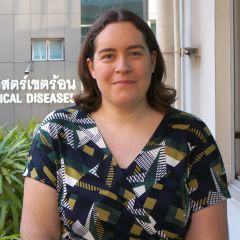
Elizabeth Batty
Dr Elizabeth Batty, Head of Molecular Microbiology at MORU Tropical Health Network in Bangkok, Thailand, tells us about her research on genomic surveillance in Southeast Asia.
Translational Medicine
From bench to bedside
Ultimately, medical research must translate into improved treatments for patients. Our researchers collaborate to develop better health care, improved quality of life, and enhanced preventative measures for all patients. Our findings in the laboratory are translated into changes in clinical practice, from bench to bedside.