

Dorcas Kamuya: Voices of health research ethics in Kenya
Dorcas Kamuya leads research on the ethics of emerging technologies, collaborative science, and pandemic response. Her work explores ethical frameworks for biobanking and cell line generation in Africa, addressing social acceptability, cultural norms, and equity. She advocates for proactive, context-specific ethics to ensure research is inclusive, trustworthy, and impactful in African settings.
I am Dorcas Kamuya. I head the Health Systems and Research Ethics Department at the KEMRI Wellcome Trust Research Programme, and I also lead the Ethics Group within the department. My area is largely ethics, and within that some of the areas, I can mention three main areas that we are looking into at the moment. One of it is the ethics of emerging technologies, that is a big field for us. Artificial intelligence is one of them, but also I'll talk about others that we are more looking into. Another area is ethics of collaboration. Research has gone in big ways to make sure that collaborative research is being done, and we want to look at how that is being facilitated and also ethical. And the third one that we are really looking at, which follows on from the COVID-19 is pandemic ethics, and how institutions and governments ought to respond to crisis and pandemics, including climate change.
Following up on the work that I'm doing - or we are doing, it's a group of us that are doing ethics of emerging technologies - and I'll pick up also on work that I've been doing over the last 10 years on ethics of biobanking. So, one of the areas that has developed quite a lot in developing countries is cell line generation using samples. These are really important for researchers because then they have easy resource, within their laboratories, to do very early research at the bedside. And this could be research that is looking at what is happening within organs, research that is looking at what is happening within cells. Unfortunately, in Africa we don't have cell line generation a lot, and there have been reasons for that. We know that from Henrietta Lacks’s cells, which have been used globally, including in labs in our settings, to really inform very early on how immunity is built, what products can work for bodies, they have been used but we don't have a good representation from African samples. And so, one of the research that that we are looking at is why is this the case? African, genetically we are very diverse. Our cells, metabolism systems are quite different. So, we want to learn what are the drawbacks? How do we fill the gap? And one of the reasons is because of the acceptability of that. These are samples. People are very attached to their samples. The issue of keeping a sample alive indefinitely, immortality is a big deal, because it means this cell line will still be propagating, multiply long after the person has died. The issues of cultural norms feed in, and so we are looking at how best can the Kenyan samples be used in cell line generation? What is needed and how do we assess social acceptability? What ethical frameworks can help us figure out how these samples can be used? Because sharing is very much part of that.
The big questions in ethics, let me talk about ethics globally, are about equity and inclusion and diversity when it comes to emerging technologies about ethics of collaboration. This has been going on for quite a while, but we haven't quite got it right. And it's also about making sure that ethics and especially in our continent, Africa, is not reactive. It is not waiting for things to happen, but it is more proactive. We are anticipating things and therefore we prepare, so that we are in the forefront when issues emerge. We saw that with the pandemic, we’re quite behind, and so it took a long time for studies to even happen in Africa. We want to be ahead of that.
My work is about making sure that the views, opinions, issues of participants, communities, researchers are centre and forefront of every research that we do. This matters if research is going to be, first of all contextually relevant in our settings, is going to be respecting of views and opinions of those whom research is meant for, and whom data is being used for, and whose findings have got direct implications for. So that's why it matters. We can talk about research in many ways, but if funders are not listening (and I don't think they are not, they are listening), but if research is to be sustained, it has to be ethical, there's no question about it. We have learned historically how a small mistake can completely affect the entire ecosystem of research. We are particularly very aware and especially in Africa, because we know of our weak systems that ethics has to be seen to be in the forefront, that we have to create the right trusting relationships, the right ethical guidelines, the right frameworks to make sure that research is going to happen. Otherwise, we are one of the continents with the heaviest disease burdens. We need to do something about it, and research is one way to address it. And that's why ethics is very much the centre of research.
This interview was recorded in September 2025.
-
Dorcas Kamuya
Professor of Global Health Ethics
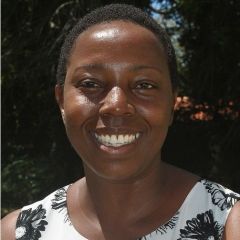
Dorcas Kamuya
Dr Dorcas Kamuya, Head of Health Systems and Research Ethics at KEMRI Wellcome Research Programme in Kilifi, Kenya, tells us about her research on health research ethics in Kenya.
Translational Medicine
From bench to bedside
Ultimately, medical research must translate into improved treatments for patients. Our researchers collaborate to develop better health care, improved quality of life, and enhanced preventative measures for all patients. Our findings in the laboratory are translated into changes in clinical practice, from bench to bedside.