

Evelyne Kestelyn: Sustainable clinical trial models in LMICs
Evelyne leads clinical trial operations in regions with high infectious disease burdens, focusing on ethical, efficient, and locally driven research. Her work, including the Africa Asia Alliance for Clinical Trials (A3CT), aims to strengthen south-south collaborations, accelerate trial delivery, and expand access to new treatments for underrepresented populations through innovation and capacity building.
My name is Evelyne Kestelyn, and I'm the Head of the Clinical Trials Unit for the OUCRU research programme based in Vietnam, Indonesia and Nepal. My area of interest is the conduct of clinical trials in regions where the burden of infectious diseases is the highest, and where patients usually don't have access to novel treatments. In my role as Head of the Clinical Trials Unit, it's really important that we try to improve the design and the conduct of clinical trials, and that we ensure that clinical trials are conducted ethically for the patients, but also efficiently. I think one of my main areas of importance is the support, and to sustain the local clinical trials capacity.
We run (in my opinion) a lot of really important and innovative trials across the OUCRU research programme, but one project I would like to highlight in particular is what we call A3CT and it's the Africa Asia Alliance for Clinical Trials. This is a project that I think is ambitious but very timely, because it aims to bring together clinical trial units across many different countries in both Africa and Asia. Our goal is to establish a locally-led, equitable, so south-south collaboration, sustainable research platform for clinical trials, to foster collaboration but also to help train the next generation of clinical trialists in the region, and to see how we can amplify our impact. I think that it's really important that we support capacity building in the regions where infectious disease burden is high. I don't think (I hope) the next pandemic will originate next to a very well-funded research institute in the UK. We live in a globalised world, so I think it's really crucially important that strengthening research capacity is a global initiative.
One of the big questions that I grapple with when it comes to clinical trial conduct in lower research settings is: how can we make trials more cost-effective? How can we increase the speed at which trials are conducted without compromising the quality? Clinical trials are still the gold standard when it comes to generating evidence-based data for clinical decision-making. I think in this time of disinformation, the power of social media, some scepticism related to healthcare, I think it's really, really important that we continue to conduct very rigorous research programmes. I feel that it's important to do so, but clinical trials are very time consuming, and they are becoming increasingly more expensive. So, how do we continue to contribute to that kind of rigorous body of work in a more cost-effective way? And I think the answer is in collaboration, but also in innovation, when it comes to looking at different ways of designing clinical trials, when it comes to including concepts like artificial intelligence in clinical trial design. So, I think there is an innovative and a creative way, I think that we can continue to do clinical trials faster, and more cost-effective.
I think and I hope that our work makes a difference for patients, first of all in the way how we conduct our clinical trials. We ensure that our clinical trials are conducted in a fair way, in an ethical way. We engage with the communities where we conduct clinical trials, to ensure that there is a level of co-creation, that we address questions that are important within the countries and the regions that we work in. So, ensuring good clinical trial conduct, but also really importantly we conduct clinical trials in areas of high burden of disease for underrepresented populations. So, our work leads to these underrepresented populations getting access to new or revised medications, to new diagnostics more rapidly.
I think funding this line of research is really important, because you're supporting a holistic approach of rigorous science, local leadership, ethical standards, and cutting-edge innovations, which ultimately leads to providing new treatments to patients who need it the most.
-
Evelyne Kestelyn
Head of the Clinical Trials Unit
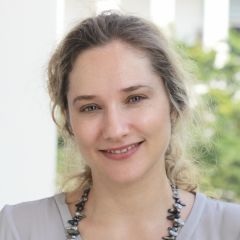
Evelyne Kestelyn
Dr Evelyne Kestelyn, Head of the OUCRU Clinical Trials Unit, tells us about her work aiming to design sustainable clinical trial models in low- and middle-income countries.
Translational Medicine
From bench to bedside
Ultimately, medical research must translate into improved treatments for patients. Our researchers collaborate to develop better health care, improved quality of life, and enhanced preventative measures for all patients. Our findings in the laboratory are translated into changes in clinical practice, from bench to bedside.