

Charles Sande: Paediatric infection and immunity
Charles Sande investigates why some children in sub‑Saharan Africa survive infections while others do not. Using proteomics, transcriptomics, metagenomics and clinical data, his work identified immune differences linked to mortality. A recent multi-country study highlighted IL10 as a key marker of high-risk children, supporting more targeted care and personalised interventions.
My name is Charles Sande. I'm a Research Scientist at the KEMRI Wellcome Trust Research Programme, and an Associate Professor at the Nuffield Department of Medicine in Oxford.
My work focuses on the area of childhood infection and immunity. I am particularly interested in understanding why children in sub-Saharan Africa die in the numbers that they do. When children are admitted to hospital, not all children are at an equal risk of death. Some children are likely to survive, and some not. What we don't fully understand is the reason why there is this difference. So, my work focuses on understanding why some children having faced infection develop immune responses that are adequate to meet that infection, and some are unable to mount an appropriate immune response and succumb to those infections.
We do this work by combining cutting-edge tools in research in the areas of proteomics, transcriptomics, metagenomics, with real life clinical data and samples from children admitted to hospitals from different parts of sub-Saharan Africa. By combining these things, we can interrogate the immune systems of children with different outcomes, and determine what differentiates those who survive from those who die, with the hope of eventually developing interventions, drugs and vaccines that address those differences and ultimately reduce the burden of death in these children.
One of our big flagship projects that we're just about to publish focused on children admitted to hospitals across Africa. So, we looked at children admitted to hospitals in Kilifi, Kenya; in Blantyre, Malawi; Kampala, Uganda. We looked at children with infections in Migori in the western part of Kenya and so on. And we collected samples from these children when they were admitted to hospital, and then we followed these children through the course of admission. And unfortunately some children succumb to the infections, and some survived to discharge. So, we went back and looked at the samples that we collected at the time of admission to look what was different between these two sets of children. And what we found is there was a molecule, a gene called IL10 that was very different between these two children. It was expressed at a much higher level in the children who died, compared to those who survived. And that therefore meant that we could potentially use this as a tool to identify kids at the time of admission who are likely to die, and divert far more resources to them. It also means that we can develop interventions that are tailored specifically to this risk, in the in the hope of reducing infection. One of the really interesting things that came out of this is that we found that our predilection to express this gene differently is partly as a result of our genes. Our genetic differences as individuals meant that some people are likely to express it at a higher level than others, and that difference made the crucial difference as to whether you're likely to survive that infection as a baby or not. So, it's these kinds of studies that are helping us to develop a much deeper understanding onto the unique nuances on how African children respond to infections, with the hope of tailoring interventions to those populations.
The big question in my field right now is how you can identify individual risk of death in children. Doctors in sub-Saharan Africa see tens of children every day, and they need to know which children are much more likely to succumb than others, in order to focus resources and efforts to those. So, it's really that area of personalised medicine, and particularly identifying risk at this at the beginning in order to tailor interventions to individual children.
My work makes a difference to patients by putting tools in the hands of doctors to identify who needs special attention, and in doing so, it helps doctors focus on those children who are really in need of those things and who are unlikely to survive without focusing those interventions on them. So, I think that's really the crux of our work, it’s not just understanding the biology of how children respond to infection and potentially die from infection, but also giving doctors the tools to understand what's happening with those children, and to develop interventions that are particularly suited to high-risk children.
Our line of research really matters, and should be funded because we here, working in sub-Saharan Africa, are really at the front lines in the war against childhood mortality. This is where more than 90% of childhood deaths occur, and yet solutions that are developed are tailored for high-income country populations. What we are doing here, is to particularly address the children who are most at need, who are at most at risk of dying, and identifying the features of the illnesses that make them especially susceptible to death, in a way that it doesn't for children who live in higher resource settings, who have more access to more advanced care. We appreciate the support that we've gotten so far from funding, but the work still needs to be done to look at these children and identify the unique features of the illnesses that make them at risk of death, and to develop interventions that are specifically targeted at them.
This interview was recorded in September 2025.
-
Charles Sande
Associate Professor
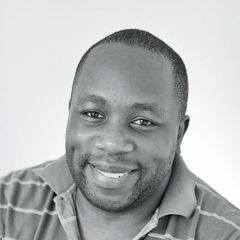
Charles Sande
Associate Professor Charles Sande, Principal Investigator at KEMRI Wellcome Research Programme in Kilifi, Kenya, tells us about his research on paediatric infection and immunity.
Translational Medicine
From bench to bedside
Ultimately, medical research must translate into improved treatments for patients. Our researchers collaborate to develop better health care, improved quality of life, and enhanced preventative measures for all patients. Our findings in the laboratory are translated into changes in clinical practice, from bench to bedside.